Agents
An agent is the AI worker you define. Give it instructions, choose a model, and connect the tools, skills, and memory it needs.
Define what your agent should do and which tools it can use. Run it from the dashboard, CLI, or API, or have it start on a schedule or event. Mobius keeps the work going through failures and human approvals, with budgets and model choice under your control.
Start with an agent: instructions, a model, and tools. Add a loop when work should run on a schedule or event. Then choose how to start the work and where its code and models run.
An agent is the AI worker you define. Give it instructions, choose a model, and connect the tools, skills, and memory it needs.
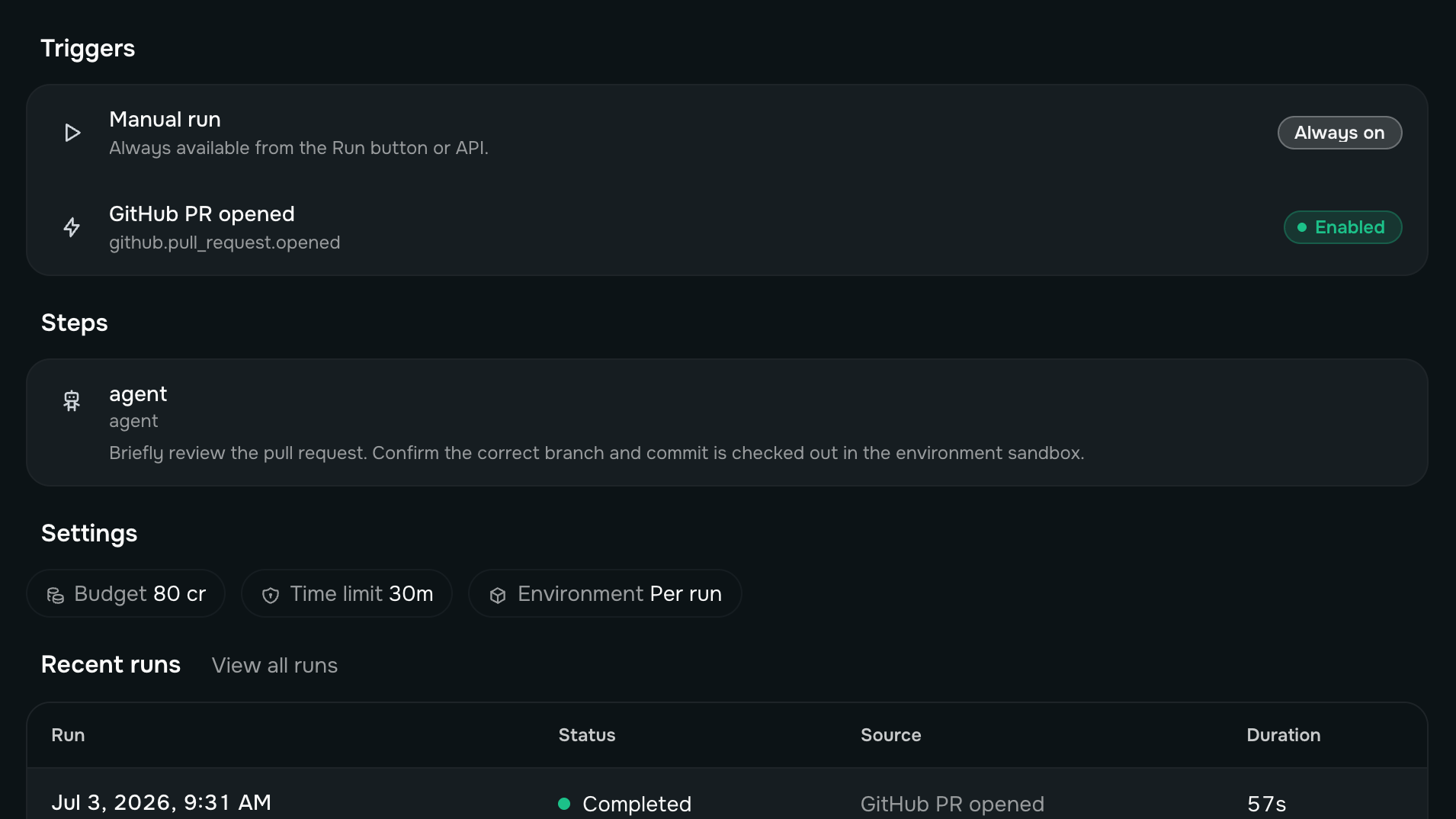
A loop is repeatable work that starts on a schedule or when an event occurs. Mobius saves each run, retries temporary failures, and controls what happens when runs overlap.
Choose what starts a loop: a schedule, a webhook from another service, or an API call from your app. Each one starts the same reliable run.
Connect an MCP server to give your agents tools from another system. They appear alongside Mobius integrations, so the agent can use them the same way.
Start and inspect work from your terminal or CI. Every Mobius API operation is available as a command, and the CLI handles sign-in for you.
$ mobius runs startCreate and manage agents, loops, runs, and sessions from your application. Typed Python, TypeScript, and Go clients are generated from the OpenAPI spec.
POST /v1/.../loops/{id}/runsSend one message to an agent. Stream the reply on the same request, or get the session and turn IDs first and connect afterward. Retrying the same message resumes the existing turn instead of creating a duplicate.
POST /v1/.../agents/invokeSet a maximum cost for each run and time limits for each step or agent turn. See where the money went and stop runaway work before it becomes a surprise bill.
Use a small Mobius worker to connect agents to Ollama or another model on your own hardware. The model endpoint does not need to be public.
Mobius saves progress as work completes. If a service restarts, a provider has a temporary failure, or the agent waits for a person, the run can continue instead of starting over.
Mobius saves progress after every step. If the service stops, the run continues from the last completed step when it comes back.
Choose how many times a step should retry and how long to wait between attempts. Persistent failures stop the run and remain visible for review.
Pause until a time, event, or human response. The run releases compute while it waits and resumes when the condition is met.
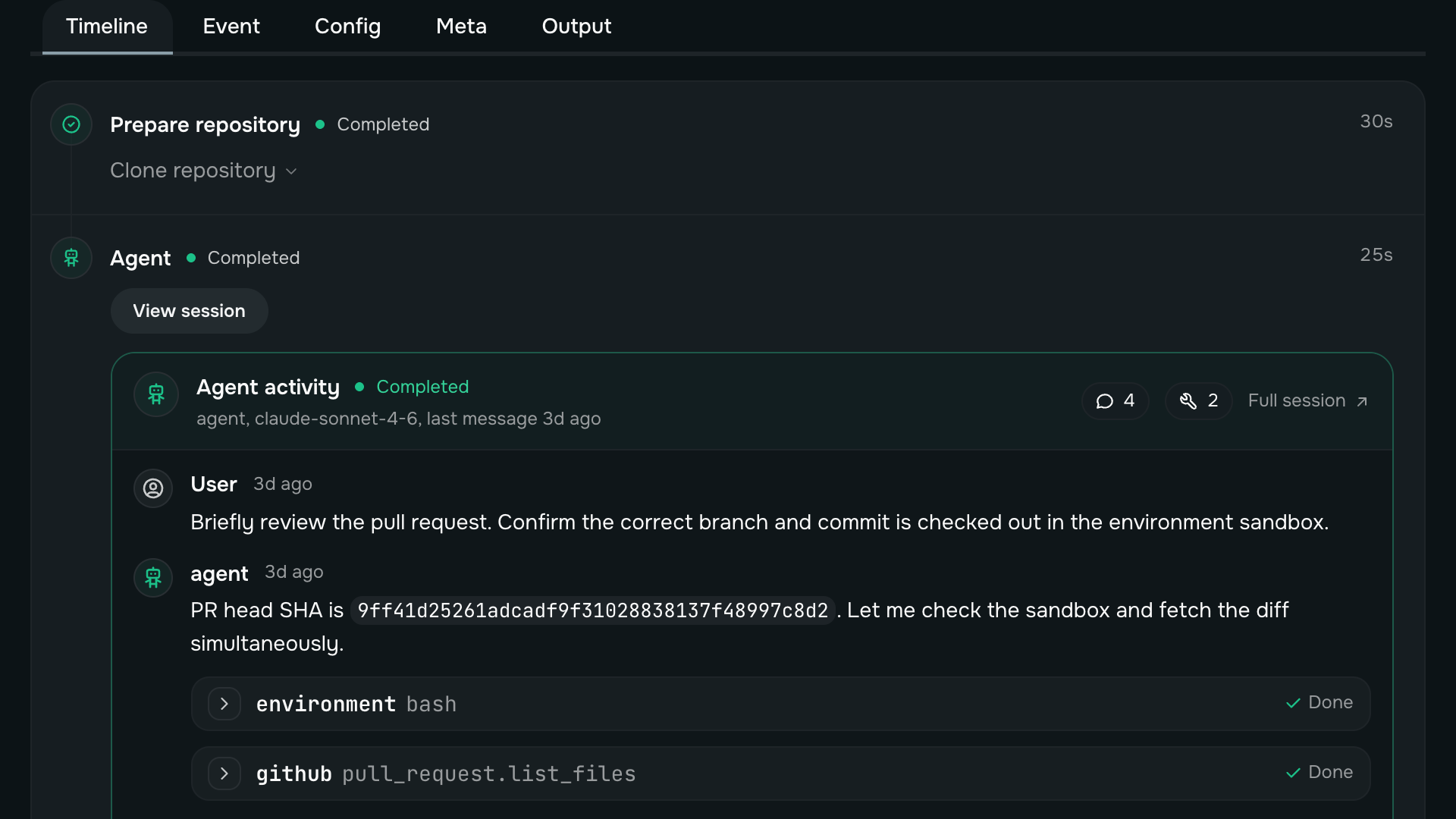
See when each step started, which tools and actions ran, where the run waited, and which artifacts it produced, both live and afterward.
An action is a specific operation, such as posting a Slack message. Let an agent decide when to use it, or add it directly to a loop when it should always happen.
Give the agent the Slack action as a tool. During its work, the agent can decide whether to send a message, choose the content, and use the result in its next decision.
Add the same Slack action directly to a loop as a step. Mobius can send the message every weekday at nine with the values you provide, without asking a model to decide.
Install a Mobius worker on your own machine or in your cloud. Mobius sends it tool, action, and model requests, which it executes inside your network. The worker connects outward, so you do not expose a new public endpoint.
The worker opens and maintains the connection to Mobius. You do not need to accept inbound traffic or change your firewall.
Run private code and access internal systems on the worker. Mobius receives the result, not direct access to those systems.
Route model calls through the worker to Ollama or another private inference endpoint. The agent can use those models without exposing the endpoint publicly.
You define the agent’s instructions, model, and tools. Mobius handles the production infrastructure around it: reliable execution, memory, budgets, human review, and a complete history of what happened. Those are the parts you would otherwise build and operate yourself.
Start free in minutes, no credit card required. Or follow the docs to define an agent and run it for the first time.